Seafood on the waterfront. Art along Second Street. Breathtaking sunsets over the islands.
At the end of State Road 24, bridges carry you across salt marshes into a small town shaped by the water. Clam farming, fishing and local art give Cedar Key its character—and plenty to discover between a morning walk and dinner.
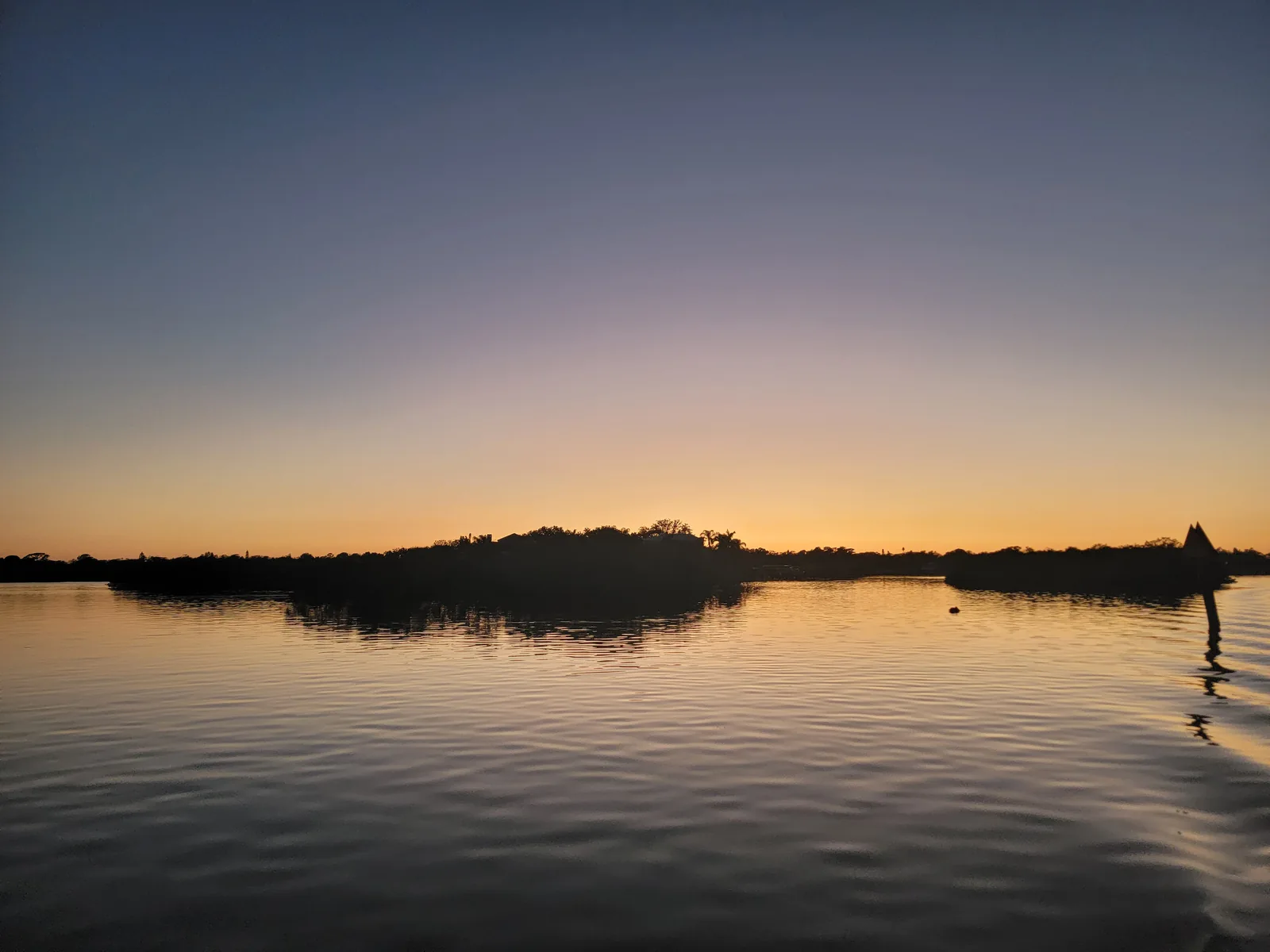
Quiet water and an open sky in Cedar Key. From our photo library.
The appeal of a small island town
Why visit Cedar Key?
Come for a fishing trip, a weekend together or time to explore on foot. The pleasures here are close at hand: a seafood lunch, a gallery you happen upon, a pelican passing over the water.
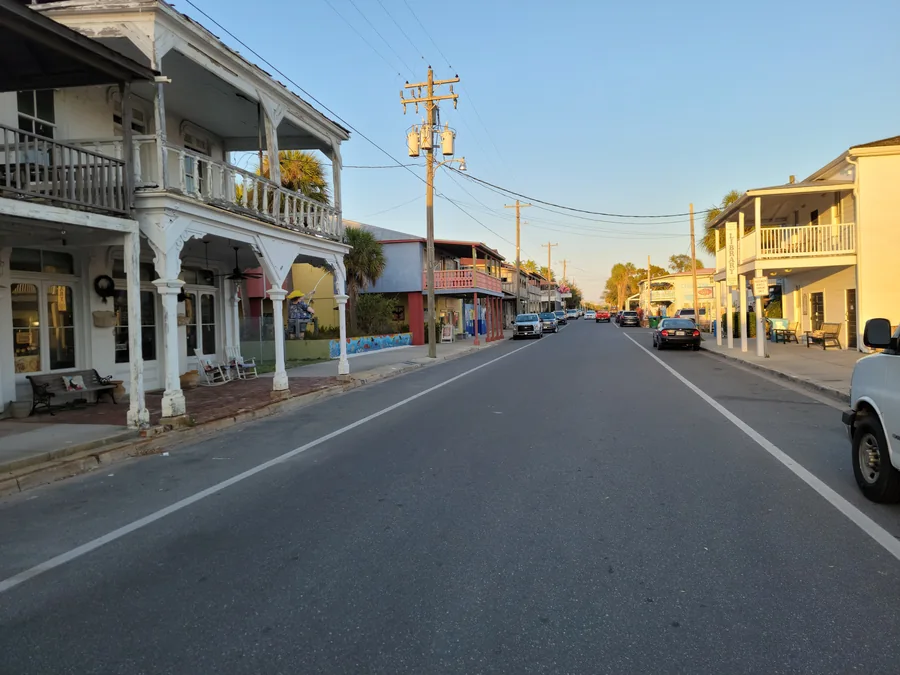
Second Street from our photo album, February 2022.
A downtown you can explore on foot
Second Street brings together shops, galleries and the Historical Society Museum. Along the waterfront, Dock Street and the fishing pier put you beside the boats and open water. City Park adds a small beach and playground to the mix. You can build a day around a museum, lunch and a waterfront walk without turning every stop into a drive.
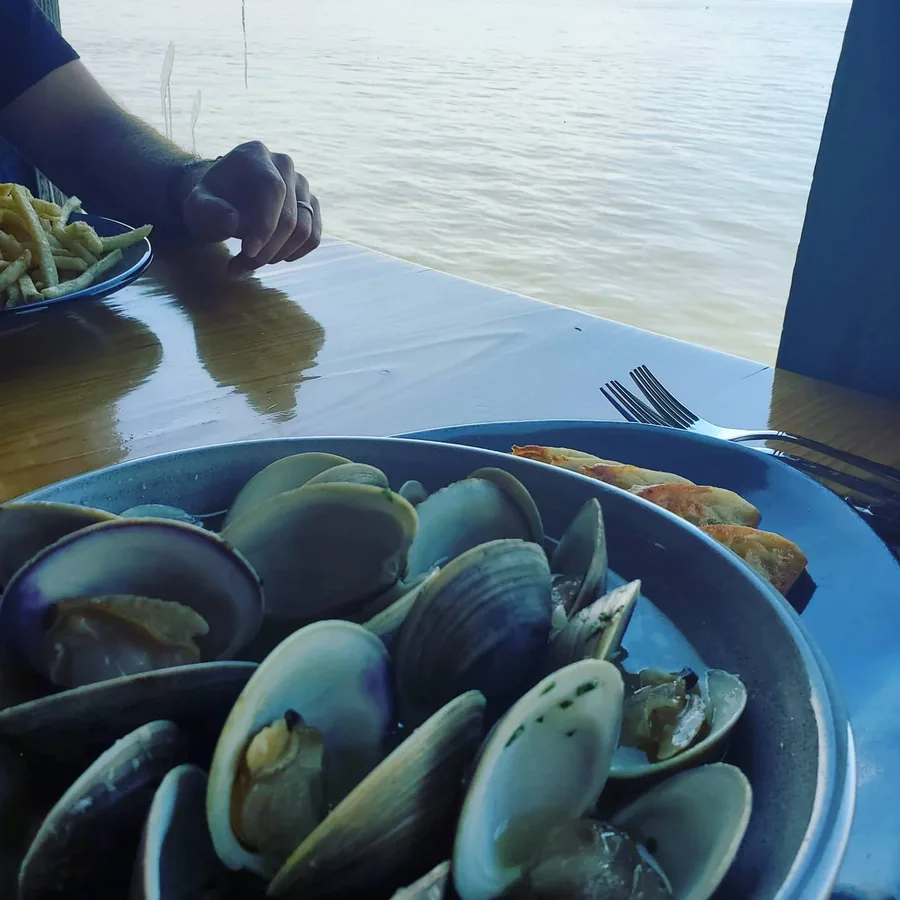
Clam farming helps keep Cedar Key’s waterfront working. Growers raise young clams in hatcheries and nurseries, then place them in mesh bags on leased bay bottom until they are ready to harvest. Those open stretches of water are also farms, supporting families and seafood businesses on shore. Look for Cedar Key clams on local menus, and ask what is local and available when you order.
Cedar Keys National Wildlife Refuge protects 13 offshore islands. Brown pelicans, herons and other coastal birds make these waters worth watching even when you have no plans beyond a walk. A guided boat trip or paddle gives you another perspective on the islands; anglers can make fishing the focus of a whole stay.
Use these stops as a loose plan, with time to browse and check hours along the way. The downtown museum, art, park and waterfront fit naturally into the same outing.
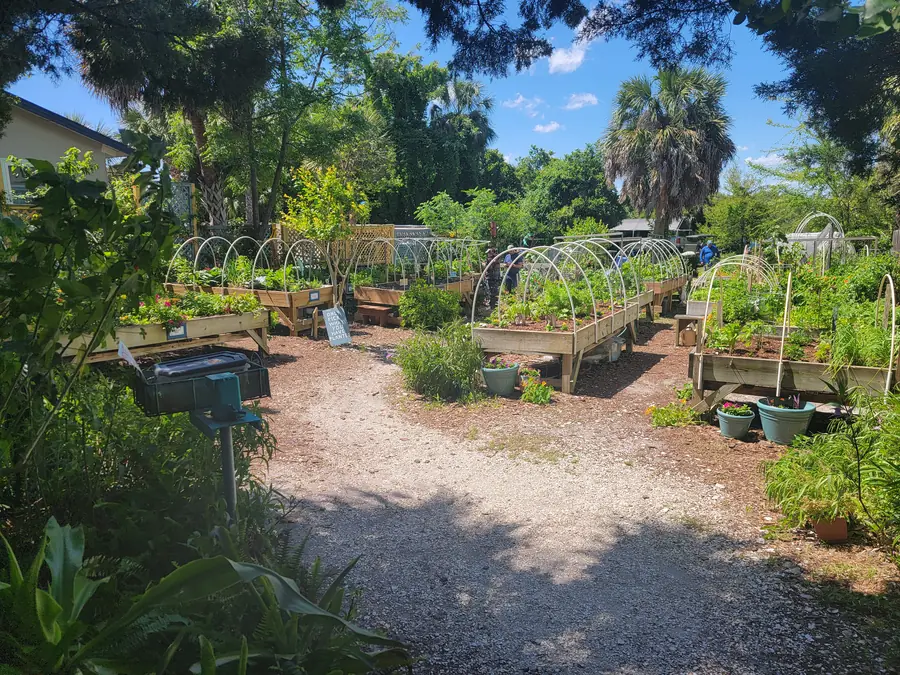
Another side of town: the Cedar Key Community Garden, photographed in April 2022.
Begin with Second Street
Browse the shops and stop at the Cedar Key Historical Society Museum at 609 2nd Street. Its railroad and fishing exhibits give the waterfront you are about to explore a little more meaning.
Look for art beyond the shop windows
The Cedar Key Arts Center at 457 2nd Street has a sculpture garden with a fisherman, fish and a cormorant mosaic. Look for the painted clam sculptures around town, too: the Clam Sculpture Trail connects local art with the shellfish industry.
Head to City Park for the little beach and playground, then explore Dock Street and the public fishing pier. Choose a restaurant that catches your eye and leave time to watch the boats.
Save an evening for the sunset
Make a separate walk to the waterfront part of your stay. A sunset can be a reason to linger on its own, without a tour or a packed itinerary. Our guide includes sunset spots, restaurants and more places to explore.
Long before the present town, Indigenous communities built the crescent-shaped shell ridge at Shell Mound, north of Cedar Key. University of Florida researchers have found evidence of large summer gatherings and feasts, likely tied to the solstice. The site was a place where people lived and maintained connections across the region. Its archaeological trail makes this deeper coastal history part of a visit today.
The town’s name recalls the redcedar that supplied the pencil industry. Eberhard Faber began buying timberland in the area in 1855; local mills prepared wood for pencil manufacturing elsewhere. The Florida Railroad linked Cedar Key with Fernandina on the Atlantic coast. Timber, rail and shipping turned these small islands into an important commercial port.
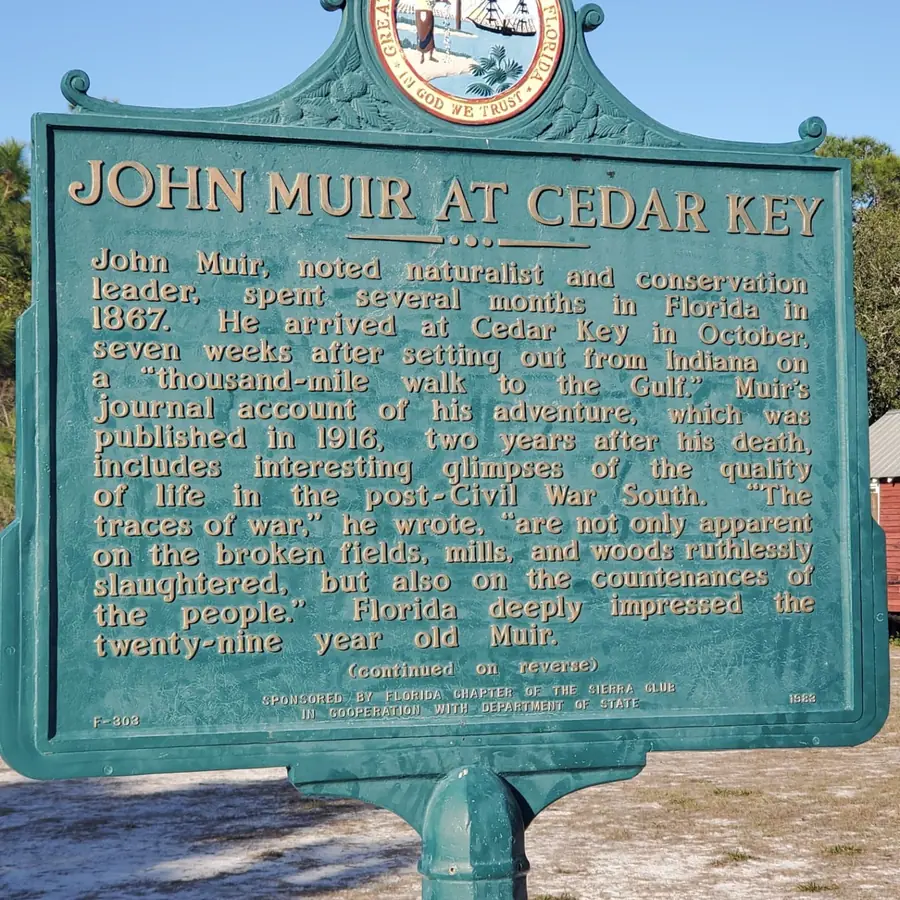
The naturalist arrived in October 1867 during his thousand-mile walk to the Gulf. He stayed while recovering from malaria and wrote about the landscape he encountered. The historical marker at Cedar Key Museum State Park connects that visit with his developing belief that nature had value beyond its usefulness to people—a principle that shaped his later conservation work.
The island across the water once held homes and a cedar mill. The 1896 hurricane devastated that settlement and the timber industry; depleted forests and competing rail connections had already weakened the trade. Today, Atsena Otie’s historic cemetery is a reminder of the community that lived there. Reaching the island by boat makes the town’s history feel close to the landscape.
Oyster closures and fishing restrictions disrupted local livelihoods. Retraining programs helped fishing families turn to shellfish aquaculture, keeping work tied to the water. Cedar Key’s clam industry grew out of that transition. The boats, growers and seafood businesses are part of a working community, and its story continues alongside tourism.
The names are easy to confuse. One is right downtown; the other is a separate state park with collections, a historic marker and marsh-side scenery.
Cedar Key Historical Society Museum
Downtown · 609 2nd Street
Two historic buildings tell the island’s story through exhibits about railroads, commercial fishing and earlier life on the coast. This is the museum to work into a Second Street walk. Its own recent history is one of community effort: the museum reports reopening after repairs following the hurricanes of 2023 and 2024.
Away from the downtown core · 12231 SW 166th Court
This separate state park holds St. Clair Whitman’s shell and artifact collections, the John Muir marker and a nature trail toward the marsh. Look closely at the museum’s handmade dioramas: the mid-century exhibits are part of its character, down to tiny details in the scenes.
As of November 5, 2026, Florida State Parks lists the Whitman House as temporarily closed. Check current park notices and museum hours.
Cedar Key is in Levy County on Florida’s Nature Coast, southwest of Gainesville. Follow State Road 24 across the bridges into town. The main town sits on Way Key; the Cedar Keys are the surrounding group of islands. This is Florida’s Gulf coast, separate from the Florida Keys in the south.
Lil Shark Park, in City Park at 192 2nd Street, has a small sandy beach, playground and picnic space. Plan for a little time by the water alongside the rest of your visit. The bottom becomes muddy, tides change the water level, and there are no lifeguards. Water shoes are useful.
Yes—by kayak or boat, with a route suited to the weather, tides and your experience. Atsena Otie is open to visitors, while most other refuge island interiors are closed to protect wildlife. Seasonal restrictions also apply. Check the refuge’s current access guidance and speak with your rental or tour operator before heading out.
Fall, winter and spring generally bring milder weather for walking and time outdoors. The spring Old Florida Celebration of the Arts brings a juried art show to town; seafood festival weekends add their own energy. Check the event calendar when choosing dates. For any water outing, the forecast and tides matter more than the season alone.
A day gives you time for downtown, a museum and a meal. We suggest two or three nights if you want to add a boat trip or fishing, explore farther out, and enjoy a sunset without driving home afterward. For a longer visit, leave separate days for Shell Mound, the state park and unhurried time around town.
Confirm hours for the places you most want to visit, especially museums and restaurants. For outings beyond downtown, check current trail and facility notices: hurricane repairs can affect individual piers, boardwalks and buildings. Our practical guide covers groceries and getting around; the refuge’s Friends group maintains local trail updates.
Lauren grew up visiting Cedar Key on trips to see her grandparents. Years later, we were still coming back together—and in 2021, we bought our building at 634 6th Street. The old fishing-pier photograph on our About page connects those family visits with the place we now share with guests.
Our owner-run vacation rentals put restaurants, the beach, fishing, parks, museums and breathtaking sunsets a short walk away. Find the space that fits your needs and book directly with Aric & Lauren.
History and visitor information researched November 5, 2026. Sources are linked beside the relevant sections; check the operators’ current hours and notices when planning your visit.
Stay in the loop
A little Cedar Key in your inbox.
Get our newest island guides, local updates, and occasional special offers for your next stay.
Join our email list for guides and offers from Vacation Nature Coast. Confirm your email to finish signing up. If it doesn’t arrive, check Spam or Junk and mark it “Not spam.” Unsubscribe anytime. Privacy policy